
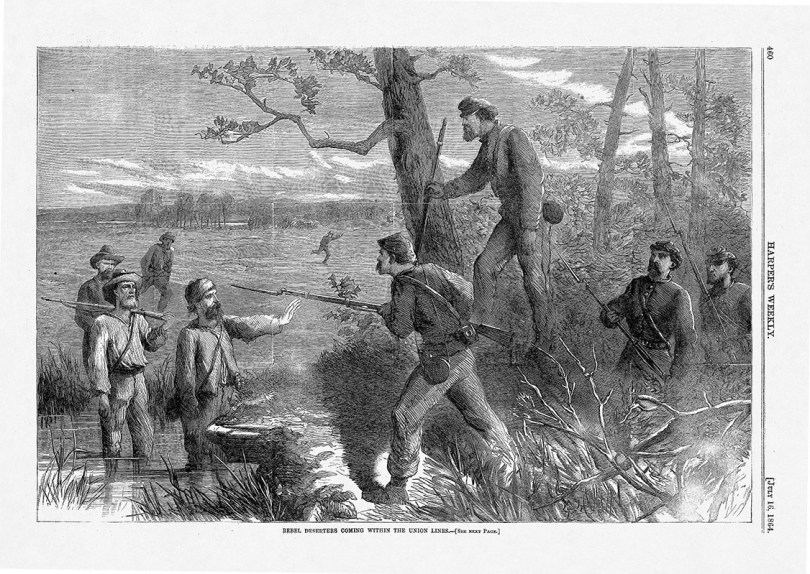
My Quaker ancestors who settled on Deep River in Randolph County suffered many hardships during the Civil War, especially at the hands of the local Confederate “Home Guard.” These units searched the area during the war for deserters and new conscripts, and their tactics were often cruel and violent. Bill Johnson, my cousin Emily Johnson’s husband, based much of his fictional book Moon Over Purgatory on documented accounts of harsh treatment.
The Century Leading to the Civil War
Beginning in the mid-1750s, people from the more densely populated northern colonies came to the Piedmont area of the North Carolina colony looking for new opportunities. The government of the colony was eager to provide land grants and to populate the backwoods area to generate revenue from taxes and fees. This also provided the government access to able-bodied men for local militias to serve as needed in the colony’s defense. (A requirement for claiming land grants was for the grantee to own a musket, powder, and shot.) At the outbreak of the Civil War, the majority of the state’s able-bodied men who would populate a local militia were pressed into service in the Confederate Army.
The Quaker Belt
Randolph County residents were mostly non-slaveholding farmers, tradesmen, and merchants. People in Randolph and the adjacent “Quaker Belt” counties (Guilford, Alamance, Chatham, Davidson, Davie, Forsyth, Surry, and Yadkin) had little interest in the Confederacy or secession from the Union. Quakers specifically opposed slavery and the war on religious grounds. Despite declaring a conscientious objection to killing, or aiding others to kill, many were pressed into service in support roles. Others paid a tax of $500 with a “proof letter” documenting religious affiliation to escape conscription into the Confederate army.
Confederate Desperation
The first draft was in 1861, and as the war progressed, the Confederacy became more desperate for soldiers with each passing year. In 1863, the North Carolina General Assembly extended the draft to include all white men aged 18–50 to serve, unless they were released by a medical board, served as public officials (sheriffs, judges, postal clerks, etc.), or worked in jobs supporting the war effort, such as millers, miners, and foundry workers. Local historian Mac Whatley has noted that prior to the passage of the law, all of these counties had very low volunteer rates. However, 40% of the state’s conscripts in 1863 came from these counties, depleting the labor force, stressing the social structure, and sometimes turning neighbor on neighbor as allegiances became more evident. By 1864, all males aged 17–50 were included, and later expanded again to include all from 16–60. (My great-grandfather R.C. Stokes was required to join in 1864.)
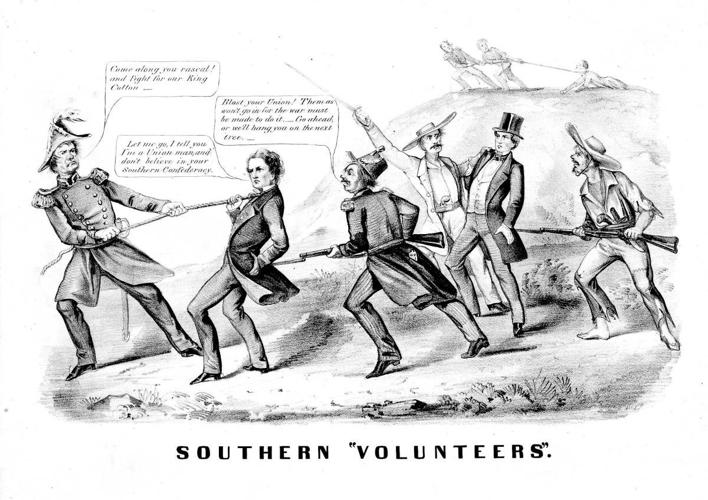
The few remaining militia members, or “Home Guard,” were charged with finding even more conscripts for the Confederate Army, rounding up deserters, and putting down any local anti-Confederacy activity. The Home Guard units at this point were often left to men of poor character and questionable motivations. Teenage boys and men over 60 were sometimes used for home guards. The difference between deserters, service dodgers, and people with valid exemptions was of little interest to some Home Guard leaders, and the pacifist population of Quakers in Randolph and surrounding counties provided a tempting target. To make matters worse, people had to contend with Confederate deserters raiding farms for food and valuables, and the bounty hunters looking for them.
Here are a few of my ancestors that resisted service in the Confederate army, ranging from great-grandparents to uncles, cousins, and in-laws. A brief account is provided for those for whom I have found credible accounts and documentation. It would be too lengthy of a task to present the specific lineage of each person. The Deep River/Holly Spring area of Randolph County was predominantly Quaker, and marrying within the faith was expected. Members of the Cox, Allen, Hinshaw, Moffitt, Barker, and other local Quaker families commonly married cousins, usually avoiding first-cousin relationships. As my daddy used to say, the marrying pool wasn’t that big back then.
Michael Cox, Thomas and Amos Hinshaw, and Clarkson Allen were cousins (and/or relatives by marriage) who were “enlisted” and assigned to duty at the Confederate salt works near Wilmington. They each paid $15 to other people to take their places for one month so they could remain on their farms. Clarkson and Amos decided to relocate to Indiana, where numerous Randolph County Quakers had moved in the previous few decades. Michael hid in the area, evading Home Guard patrols. While not among those at the salt works, Paris Isaac Cox also paid for an exemption and migrated to Indiana.
Calvin Cox, my 2nd great-grandfather, avoided conscription into the Confederate army by paying the aforementioned $500 tax (perhaps paying twice, according to some accounts). He had four children under the age of 10 at home, so one can imagine Calvin would have done all he could to remain on the family farm.
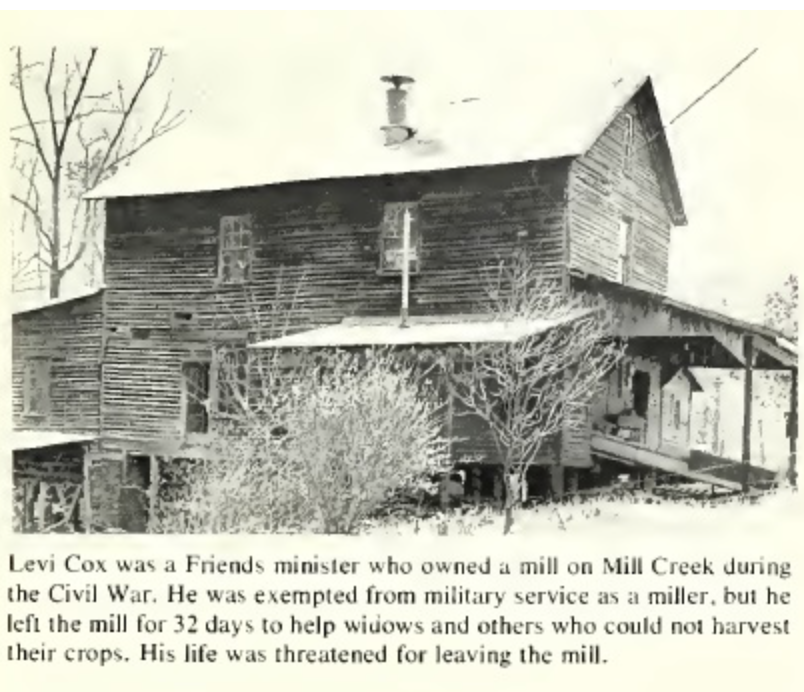
Calvin’s cousin and neighbor, Levi Cox, was exempted because he operated one of the family mills on Mill Creek, and mill production was a priority for supplying the army. Levi drew the ire of Confederate authorities when he left the mill to help with harvests and secure food for women with husbands in the army or hiding from the army, including the Thomas Hinshaw farm. He returned to the mill after a month to avoid being shot as a “deserter.” Levi’s brothers, Neri and Seth Cox, were also taken by the Home Guard, but I have not found the specific details.
Seventeen-year-old Yancey Harmon Cox was taken from his widowed mother’s small farm in June 1863. According to an account recorded by Quakers after the war, Yancey was the primary laborer on the farm despite being a slightly built teenager weighing less than a hundred pounds. His refusal to train and bear arms was punished by extensive marching in worn-out shoes that caused his feet to bleed, and his thigh was pierced by a soldier’s bayonet while being prodded along. Yancey and several dozen other “recruits” managed to escape and hide out near their homes, evading Home Guard patrols for the duration of the war.
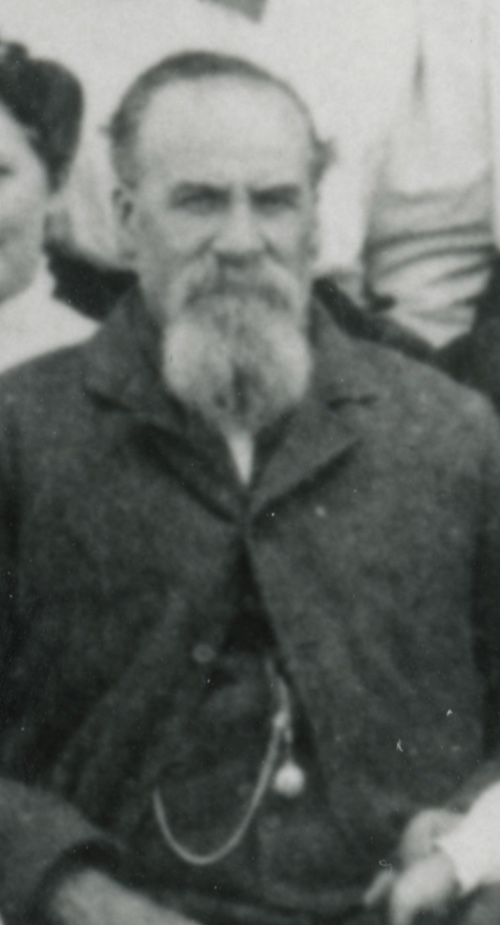
Thomas Hinshaw would be taken by the Home Guard a second time, this time with his brother Jacob Hinshaw and brothers Cyrus and Jacob Barker. Thomas was married to Mary Barker, daughter of Nicholas Barker and Catherine Cox. (Catherine was a granddaughter of Harmon Cox, “the Regulator.”) Thomas was a prosperous farmer in the Holly Spring community. The Hinshaw and Barker brothers, along with Simon Piggott (Pickett) and Nathaniel Cox, were taken by force by the Home Guard and “enlisted” in the Confederate 52nd NC Infantry in November.
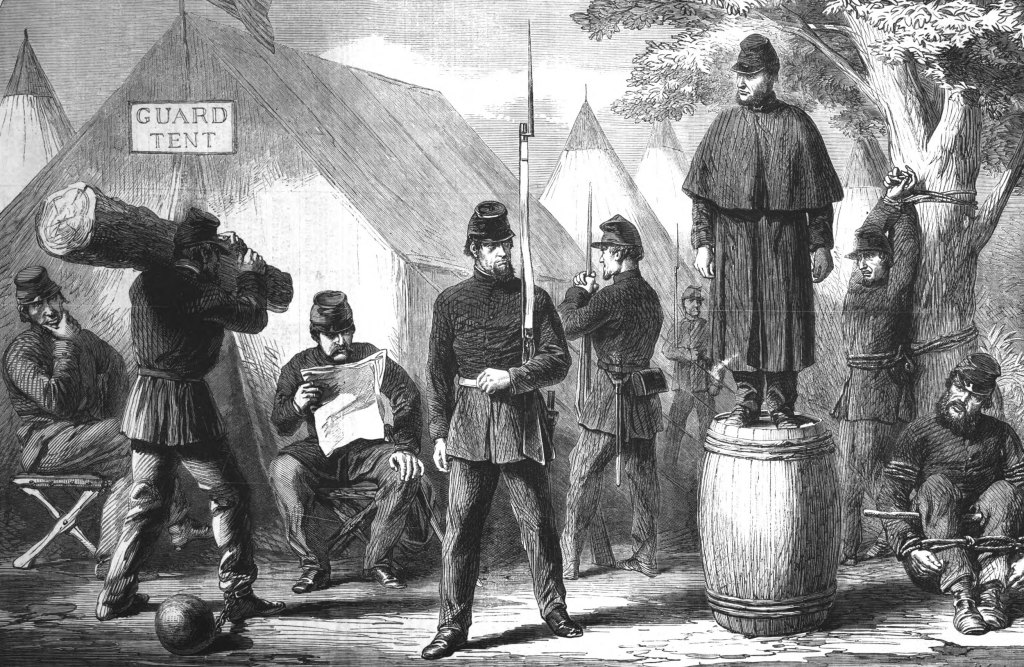
Despite repeated punishment and harsh treatment, the young Quakers refused to drill or perform any military duties. Officers eventually realized punishment was useless and basically left them to remain idle and pray. The 52nd N.C. Infantry eventually ended up at Gettysburg under Brig. Gen. James J. Pettigrew. During the battle, they were put to work at the field hospital.
At the end of the battle, a lieutenant in charge of what remained of the division decided to abandon the young Quakers, essentially freeing them. Unfortunately, they were captured by Federal cavalry and taken to Fort Delaware as prisoners of war. Local Quakers soon advocated for and secured their pardon and release, but they could not come home to N.C. Thomas Hinshaw’s wife, Mary, and Jacob Hinshaw’s wife, Elizabeth, traveled with their four children on a two-horse wagon to join them in Indiana. The trip took seven weeks.
Thomas and Mary came back to Holly Spring in 1865, but Jacob and Elizabeth made their home in Indiana. Thomas ran a country store in the area for many years. His grandson and notable Quaker historian, Seth B. Hinshaw, authored a book about his grandparents in 1982 entitled Mary Barker Hinshaw, Quaker: A Story of Carolina Friends in the Civil War Times (requires an Internet Archive account).
The list is far from complete. Approximately 40 Holly Spring area Quakers are mentioned in various historical records.
Sources of note:


You must be logged in to post a comment.