
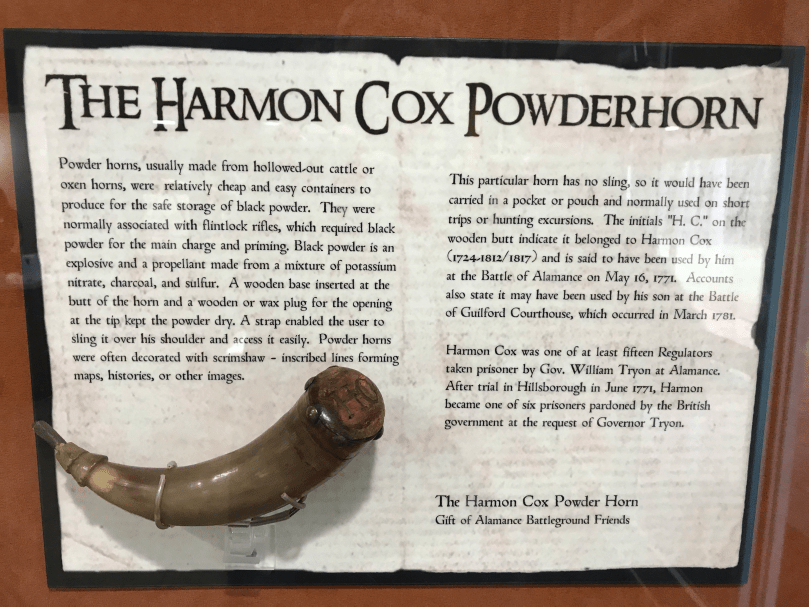
Harmon Cox, my 5th great grandfather, was the son of William Cox and Catherine Kinkey/Kankey. He was born Feb 18, 1723 in New Castle County, Delaware Colony, one of ten children born to William and Catherine.
Harmon married Jane John on December 25, 1745, at the Fairfax Monthly Meeting in Loudon County, Virginia. They had eight children: Rebecca (1747), Hannah (1751), Thomas (1753), Harmon, Jr. (1757), William (1760), Nathan (1762), Jane (1766), and Jacob (1768). (I have seen references to additional children, “Ruth” and “Nicholas,” but can’t verify through records.)
In the mid 1750s, Harmon had migrated with his father and brothers to western Orange County (Randolph County today), North Carolina. The family secured multiple Granville Land Grants along Deep River and Mill Creek.
A note on “Granville” land grants: In 1663, King Charles II of England granted land in the Carolinas to eight men who had helped him regain the throne. These men, the Lords Proprietors of Carolina, had the right to grant land to others. By 1729, seven of the eight proprietors sold their shares to King George II for political and economic reasons, making North Carolina a royal colony. One proprietor refused to sell, and his domain was later known as the Granville District after one of his heirs. From 1748 to 1763, agents of Lord Granville made grants to vacant lands and collected rents.
Harmon Cox Land Grants:
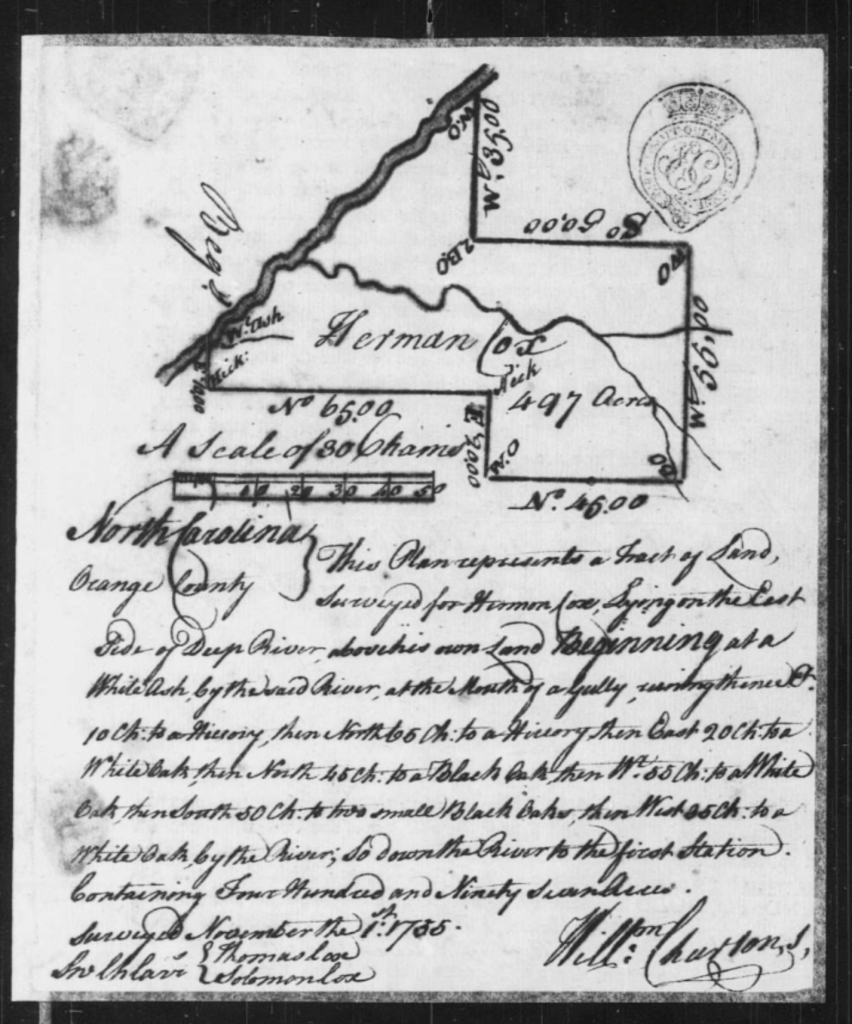
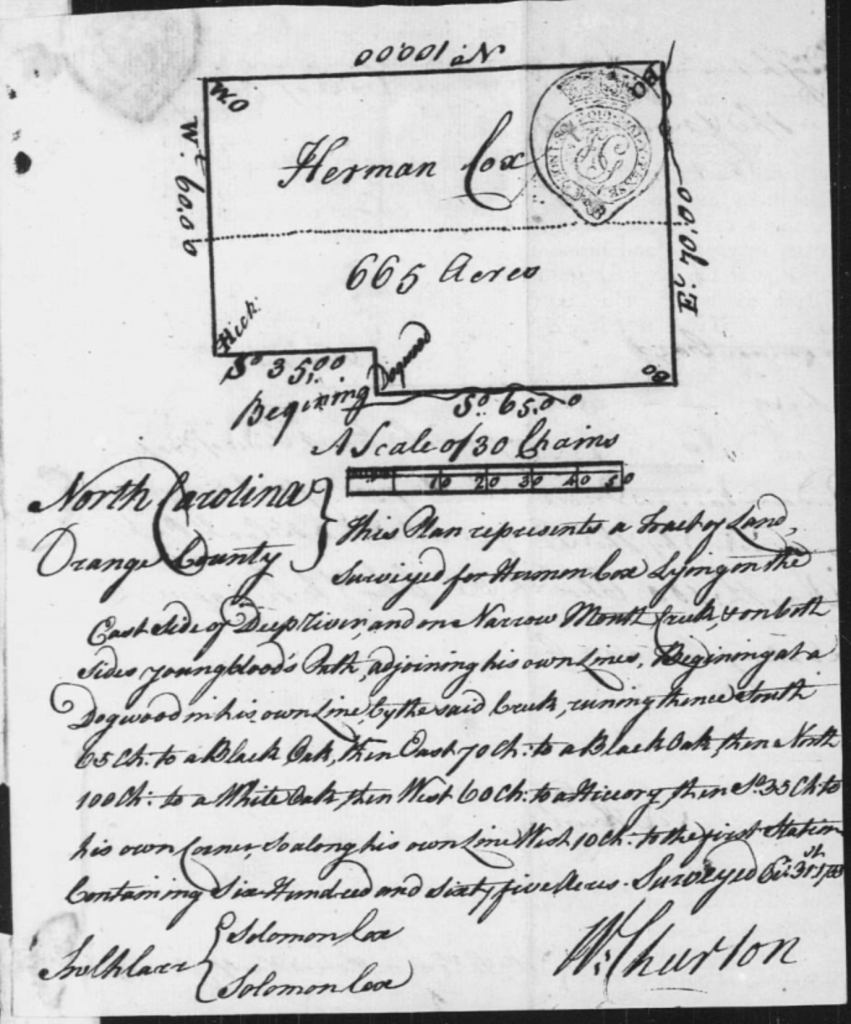

A November 1757 land grant for the head of “Cox Mill Creek” waters of Deep River, implies a Cox’s Mill was already in existence in 1757. William died in early 1767 and left his mill to his son Thomas Cox (Orange Co. Will Book A, page 53). The site was long known as Thomas Cox’s Mill.
Harmon also had a mill. According to our cousin Emily Cox Johnson:
“One of the gristmills was located west of Deep River on Mill Creek and run by Thomas Cox. A second was located less than a mile away on the East side of Deep River on Millstone Creek and run by Harmon Cox, a brother of Thomas Cox. The reason two grist mills were being run by a single family so close together was the fact that Deep River is prone to serious flooding any time during the year. These ravaging floods often render Buffalo Ford, which connects the two mills, impassable for several weeks at a time.”
Between 1764-1771, farmers in today’s Alamance, Chatham, Guilford, and Randolph counties became disgruntled with local colonial officials and the levy of taxes. These farmers, who became known as “Regulators,” drafted petitions to the Governor of North Carolina, William Tryon. Some historians suggest participants in the “Regulator movement” inspired the Sons of Liberty and their activities in Massachusetts and vice versa.
Herman Husband, a farmer along Sandy Creek in a corner of Orange County, was a vocal in opposition to unfair taxation and noted for rallying other farmers to the cause. Perhaps due to his Quaker beliefs, Husband was a moderate, attempting to bring the various sides together. However, because of his prominence as a writer (and perhaps as a correspondent of Benjamin Franklin), government officials continually identified him as a leader of the disgruntled faction. Husband and Harmon Cox were first cousins.
The activities of the Regulators were numerous during this period. Harmon signed Regulator notices and petitions, and hosted at least one meeting in 1768 at his home and/or mill.
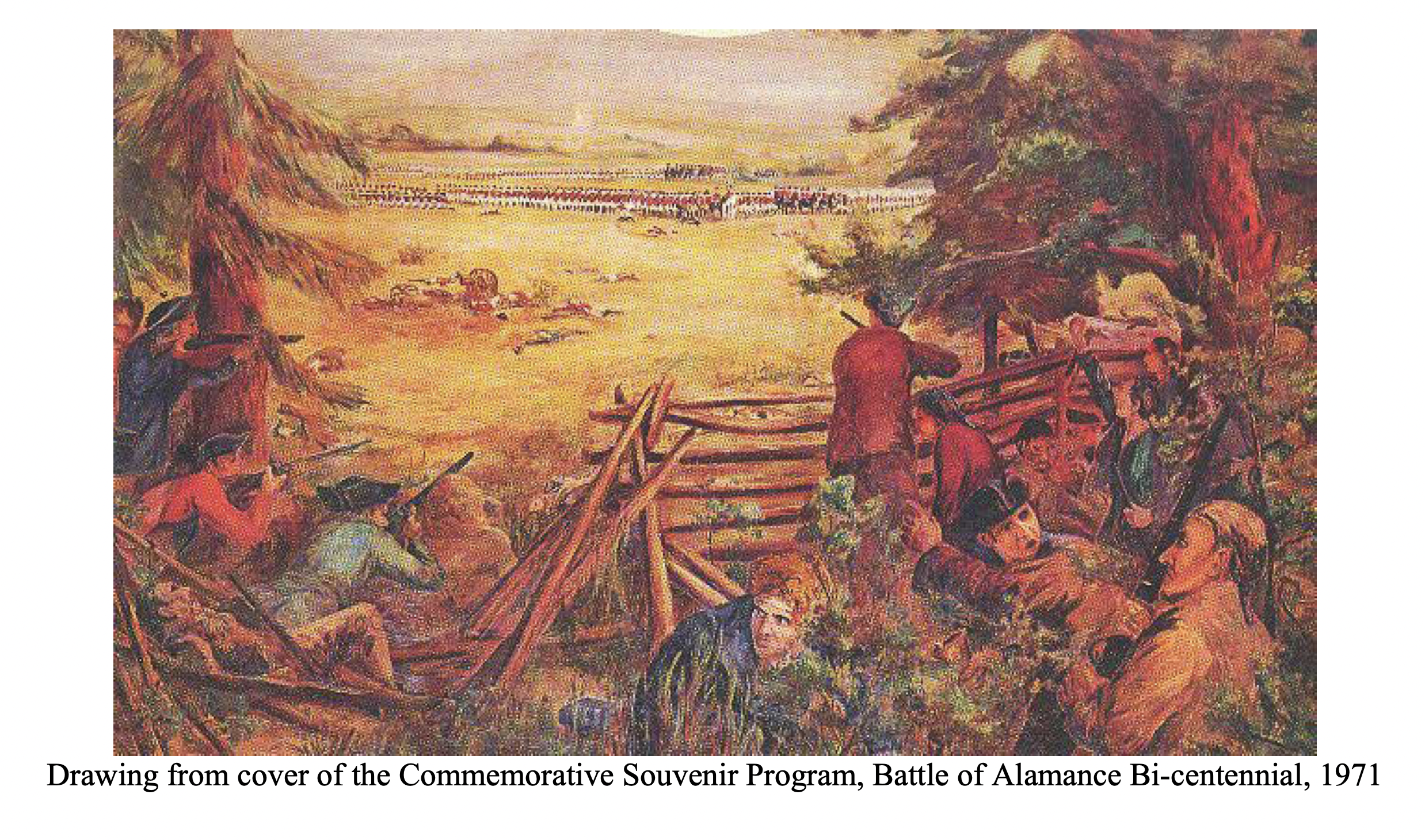
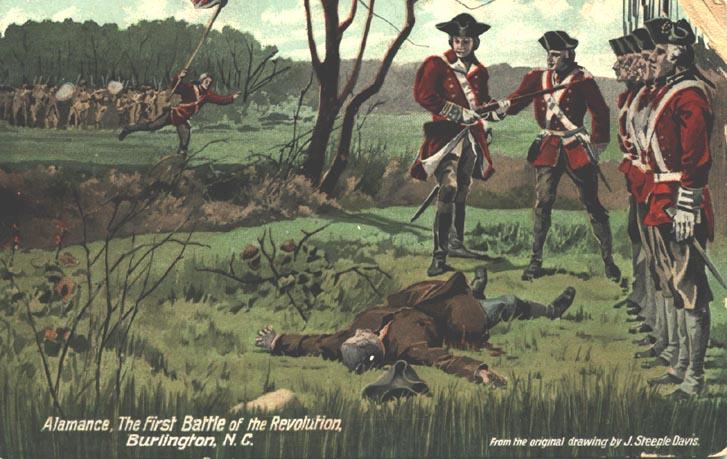
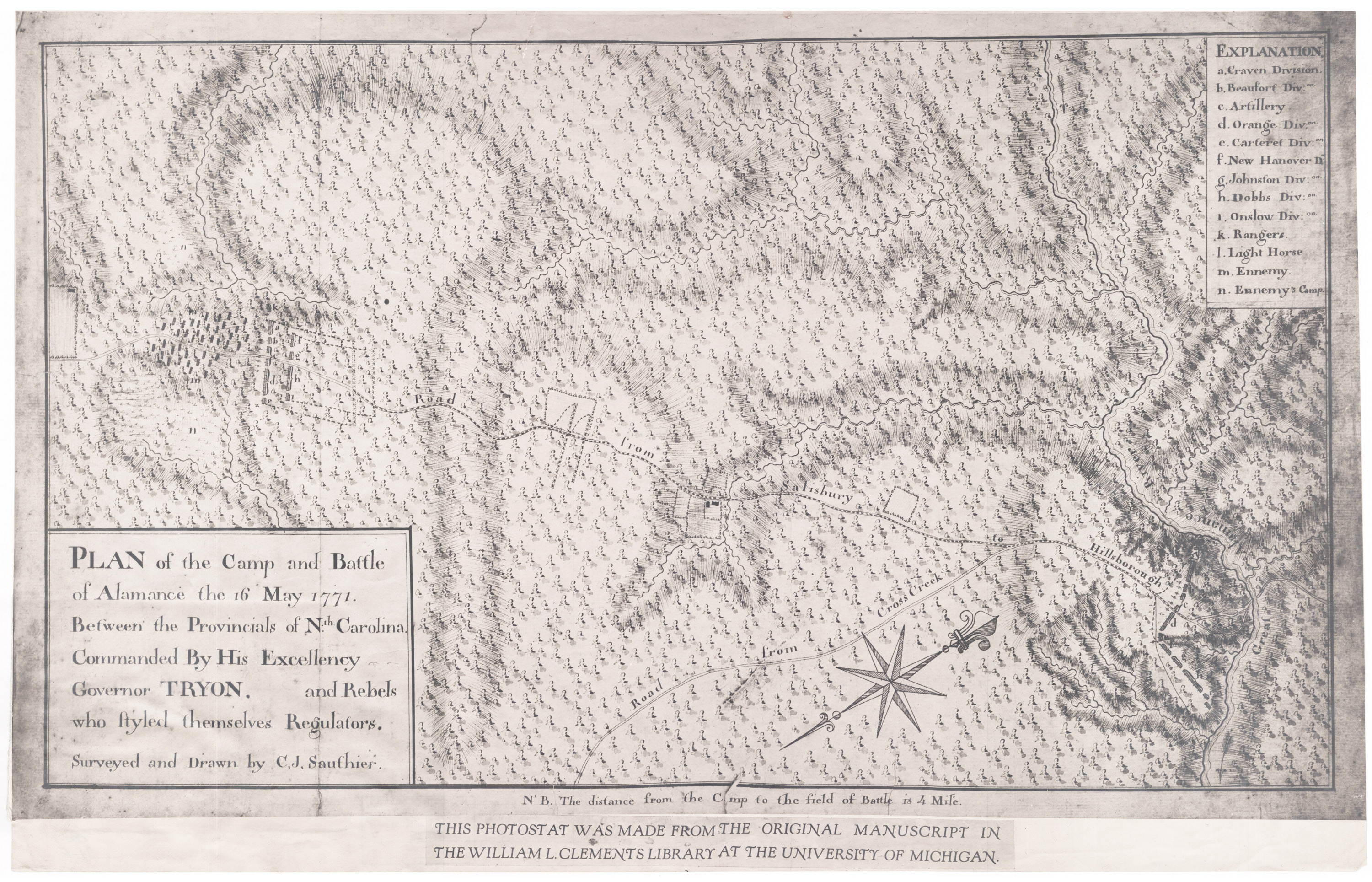
At the Battle of Alamance on May 16, 1771, the militia of Royal Governor William Tryon defeated approximately 2000 Regulators. The estimated deaths and casualties varies among articles, but it’s certain that twelve Regulator prisoners were tried in Hillsborough after the battles. Six were hanged and six were pardoned, Harmon being one of the lucky ones.
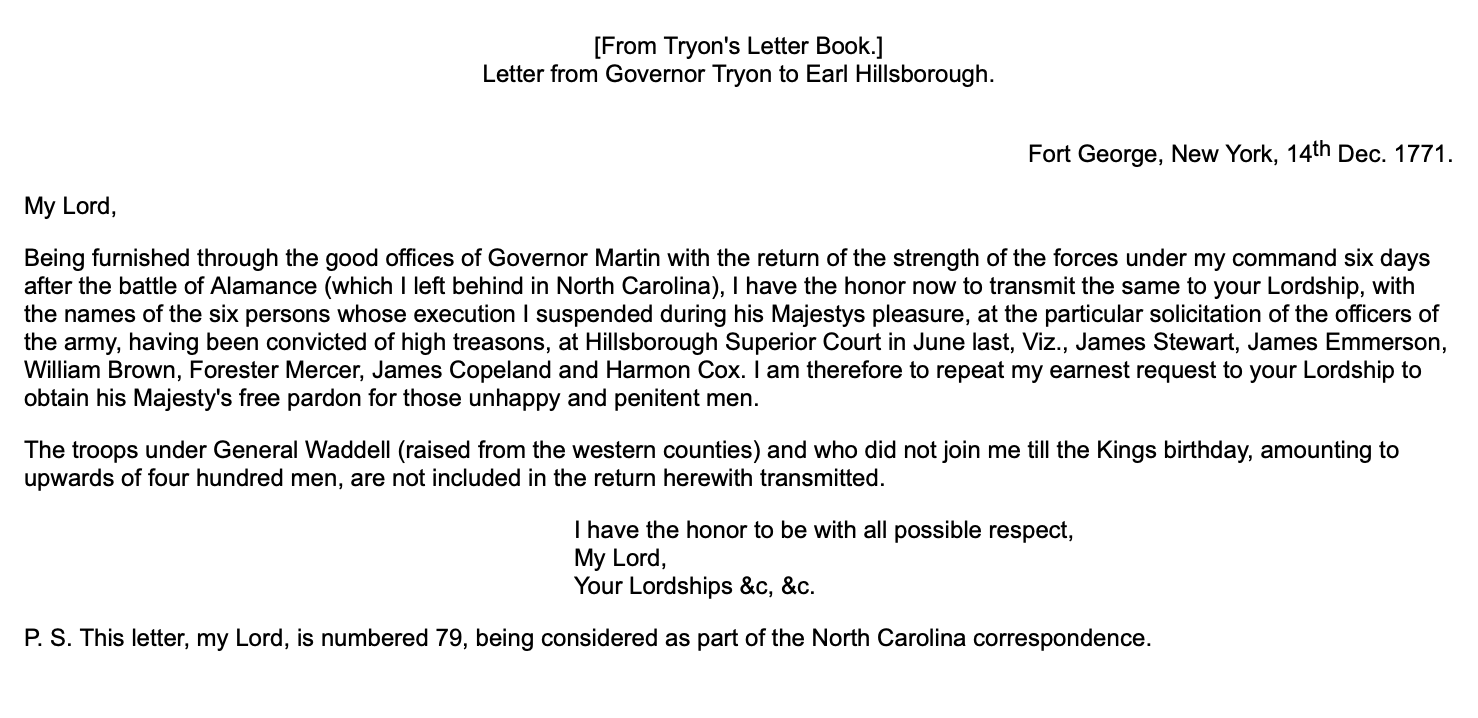
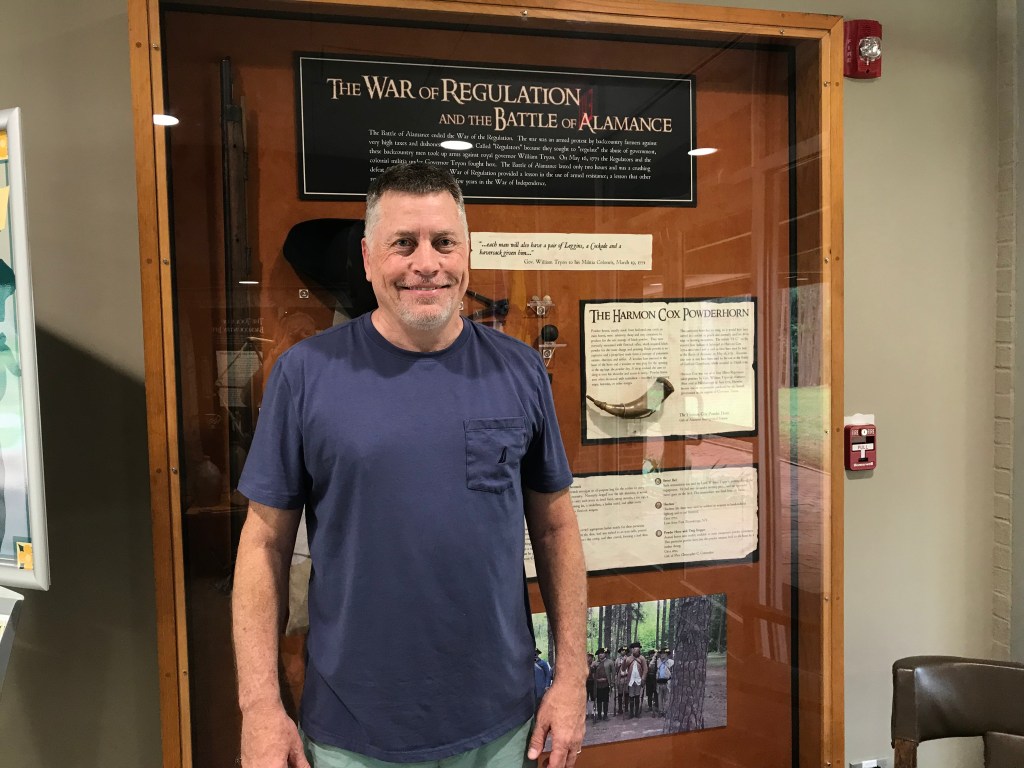
A small powderhorn used by Harmon at the Battle of Alamance was carried by Herman Husband when he fled North Carolina to Somerset County, Pennsylvania. It was donated to the Alamance Battlefield North Carolina State Historical Site by a descendant, Nick Sheedy, in 2008.
It’s difficult to identify all of our ancestors that were Regulators, but in addition to Harmon:
- Solomon Cox, brother of Harmon, signed the 1968 Regulator “Advertisement No. 9” (petition) and was at the Battle of Alamance.
- Thomas Cox, brother of Harmon and Solomon, attended the 1768 Regulator meeting held at his mill, signed the Regulator advertisement, and was at the Battle of Alamance.
- William Cox, brother of Harmon, Solomon, and Thomas, was present in 1766 at Regulator meeting at Maddox Mill, attended the 1768 Regulator meeting, signed the Regulator advertisement, and was at the Battle of Alamance.
Here’s my running list of Regulator ancestors.
After the Battle of Alamance, a militia detachment under Edmund Fanning was ordered to Harmon’s home to retrieve supplies for the militia. Below is a list of what was taken:
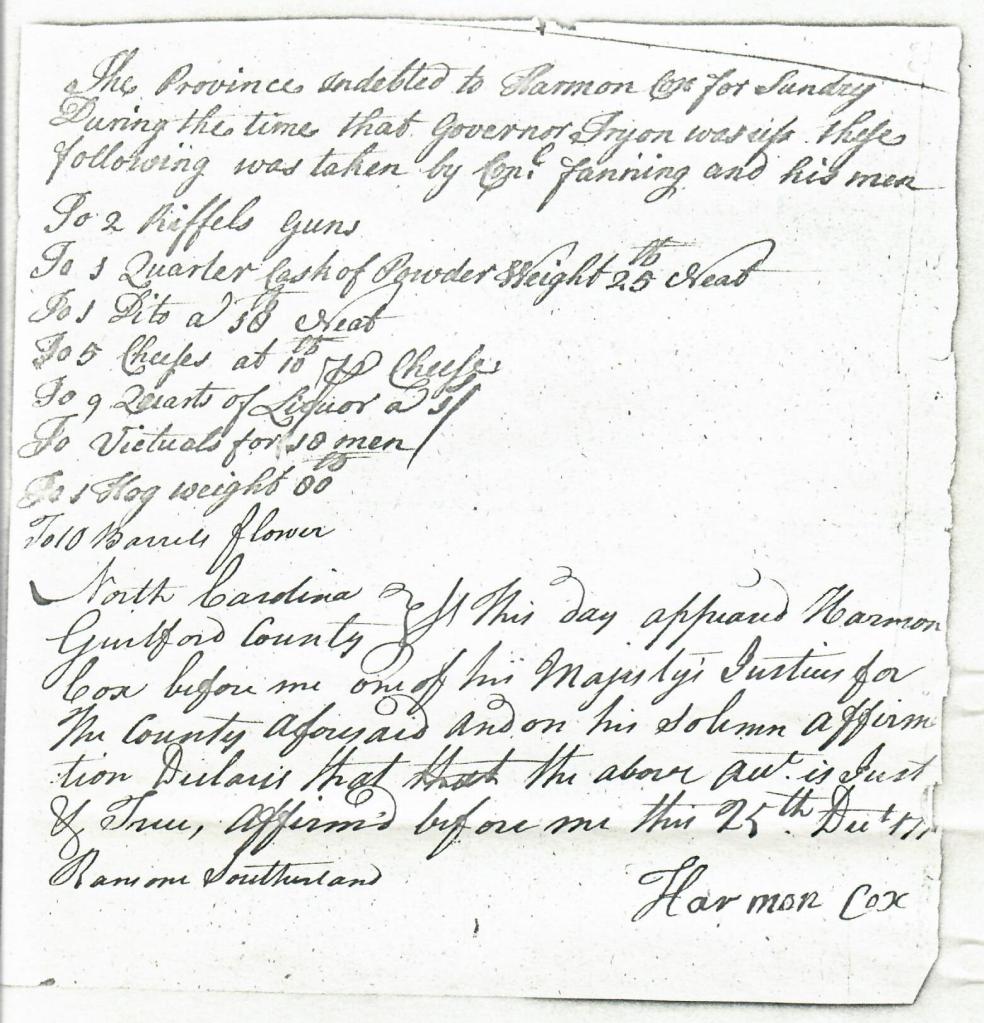
Harmon was disowned by the Quakers at Cane Creek Friends Meeting in June 1771, most likely because of his Regulator involvement. He later became a member of the Mill Creek Friends Meeting was established in “Cox’s Settlement” as an outgrowth of Cane Creek Meeting. He prospered and, according to the History of Randolph County 1779-1979, was one of the twelve wealthiest men in the County by 1779.
Harmon died in either 1812 or 1813.

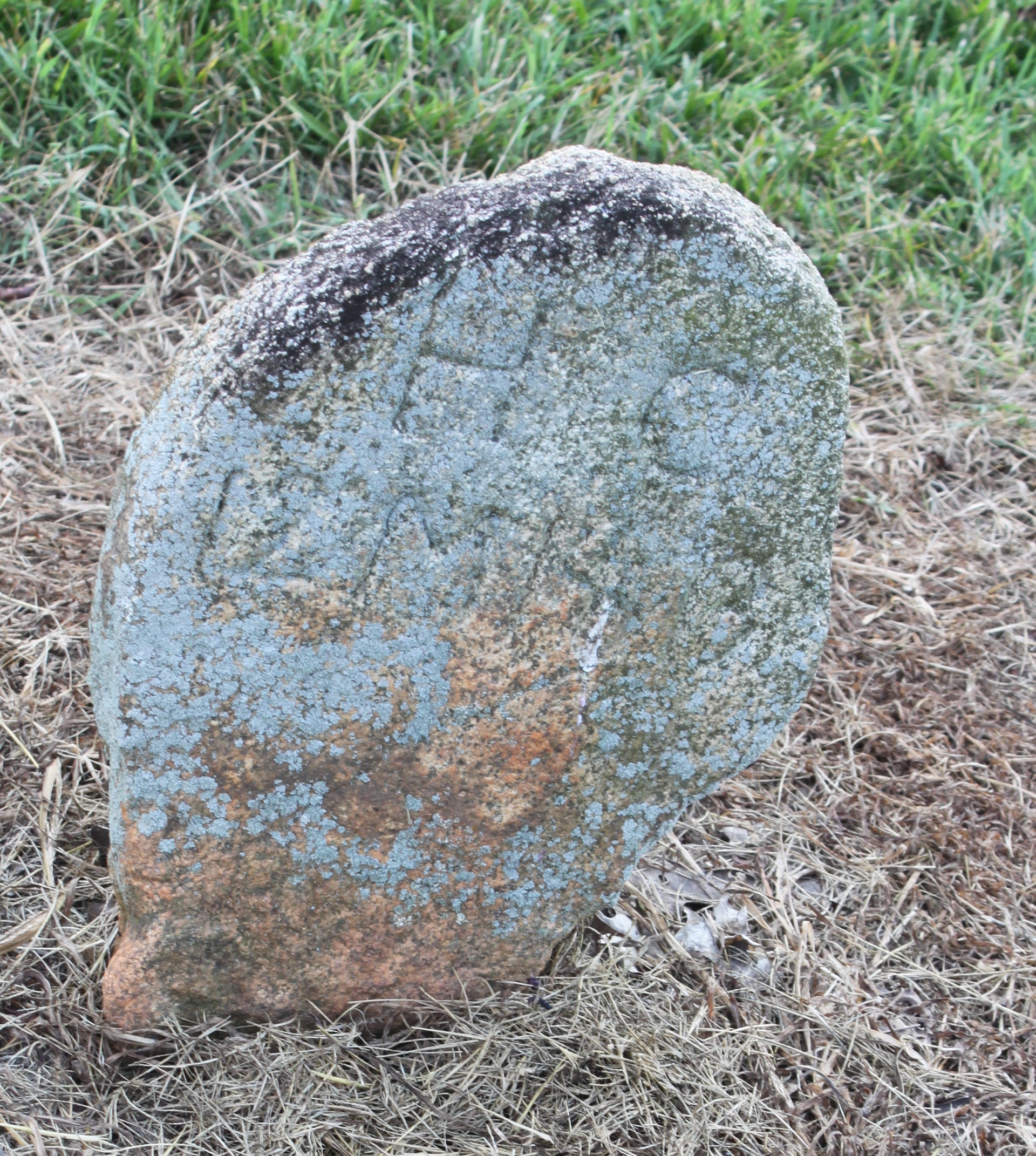
Harmon is buried at the Old Stone Graveyard of Mill Creek Friends is located at the Southeast corner of 1871 Mill Creek Road, Ramseur. The cemetery contains around two hundred graves located on land that was originally part the estate acquired through land grants and purchases by William Cox. The Mill Creek Friends Cemetery has been called the Old Stone Graveyard because most of the graves are marked only with unlabeled markers or stones from the area. Many of the stones have been moved, not realizing they were grave markers.
After the War of the Regulation and the Revolution (when the area was under the control of David Fanning), the Mill Creek Meeting lapsed. About 1790, a new group, Holly Spring Meeting, was established and maintains the cemetery today.
Sources of note:
- Historic Landmark Preservation Commission: Harmon Cox Mill
- North Carolina History Project
- Notes on the History of Randolph County
- The Regulators of North Carolina (1765-1771)
- U.S. Hinshaw Index to Selected Quaker Records (Ancestry.com)
- Historic Hillsborough
- The Correspondence of William Tryon and other selected papers, 1729-1788
 Forebears and Kinfolks
Thank you for all of this great information, we did not know much of this. Harmon Cox’s descendant Yancey Harmon Cox’s daughter Louvela Lystra Cox married William Allen Bingham and had 11 children, one was my grandmother, Alleen Lystra Bingham, RN who married Dr. Alexander Leonardo. Really appreciate you sharing so much of our history, made searching this line so much easier!
One more item of note, you referenced above that perhaps the Cane Creek friends meeting band Harmon because of his Regulator involvement, this could be a factor but referenced in their records icing on cake was due to their family and others going to Amy and Herman’s “disorganized” wedding. Since Herman was already banned, the wedding wasn’t Cane Creek approved. So proud to be rabble rousers!
https://www.anamericanfamilyhistory.com/Quakers/Meeting%20Cane%20Creek.html
I am a descendant of Harmon Cox (Hi, cousin B!) and I love finding and reading blogs and info on my heritage. So interesting! We have a Lowdermilk/Cox family reunion every year in Seagrove, NC in October.
Joanna Cox Lewis